Mild Hybrids vs Regular Hybrids
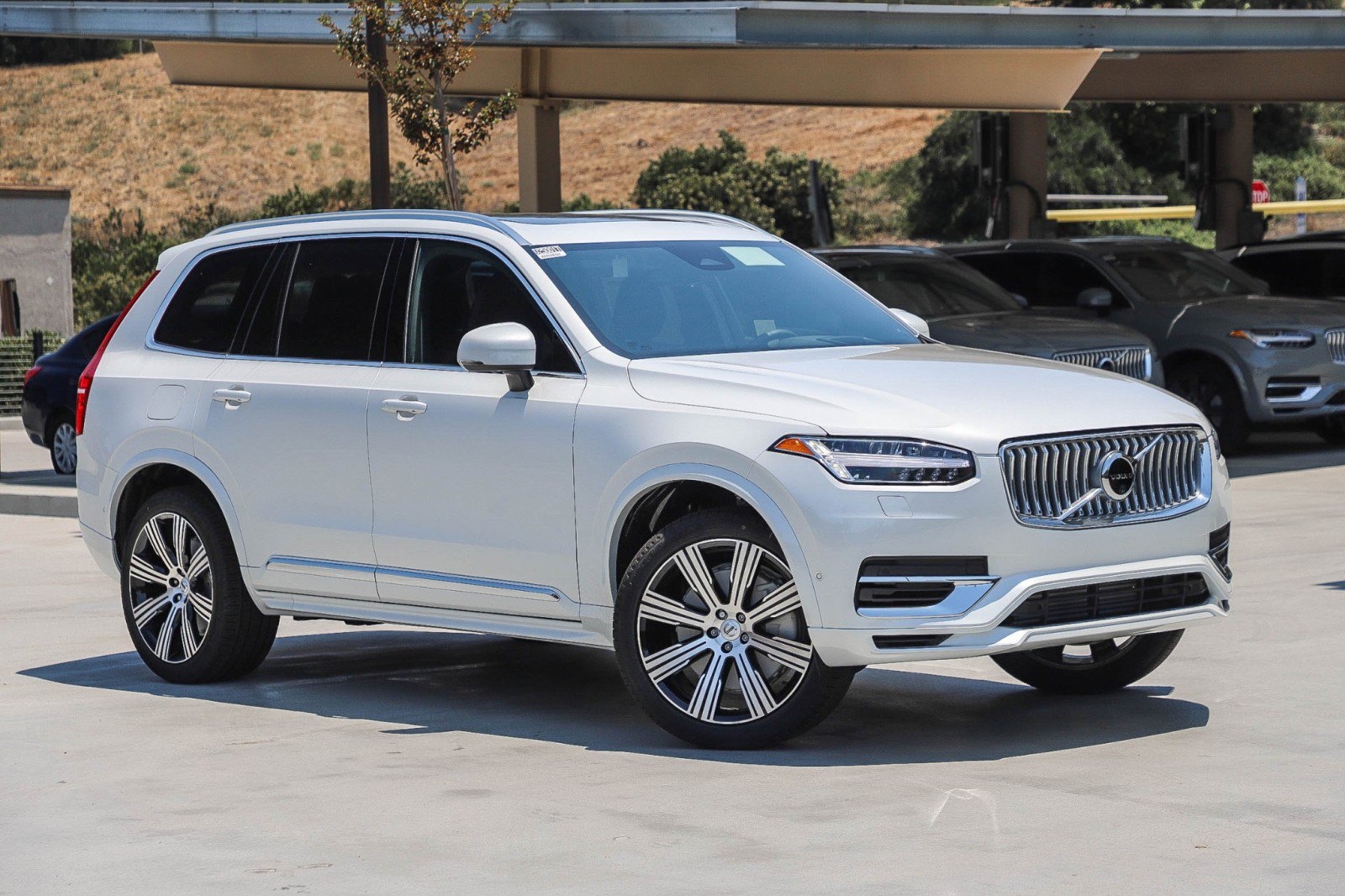
Choosing a hybrid vehicle in California can be confusing when you're juggling green values with real-world driving needs. While hybrid cars and SUVs offer better fuel efficiency than those with gas-only engines, they work in different ways. Our team at Volvo Mission Viejo put together this guide to clarify what sets the hybrid systems apart so you can decide which one suits your driving style, budget, and eco-goals.
Understanding Hybrid Vehicle Technology
Hybrid vehicles combine gas engines, electric motors, and batteries to improve fuel consumption and reduce emissions. The battery is recharged through the engine and regenerative braking, allowing the electric motor to either fully power the car or assist the engine. The vehicle automatically chooses the most efficient power source based on driving conditions.
There are three main types of hybrid cars — mild hybrids, full hybrids, and plug-in hybrids. What is a mild hybrid? Mild hybrids use small electric motors and batteries to assist the gas engine, and they can recover enough energy to allow the engine to shut off at stops. Due to their smaller motor, mild hybrids can't drive on electricity alone. The regenerative braking system captures kinetic energy during braking, converts it to electricity, and stores it in the battery.
Full hybrids use more powerful electric motors and batteries that recover enough kinetic energy to power the car for short distances at low speeds. Full hybrids have electric-only, gas-only, or combined operations.
So, what are plug-in hybrids? A plug-in hybrid is powered by both a traditional gas engine and an electric motor with a large externally charged battery. The battery gives the car a substantial all-electric range using the gas engine as a backup. The Volvo XC60 plug-in hybrid has an EPA-estimated all-electric range of 35 miles and a combined 63 mpg.
The Difference Between Hybrid and Mild Hybrids
The most significant difference between mild and full hybrids is electric motor capability. Mild hybrids use smaller motors that assist the gas engine on a 48-volt system but aren't strong enough to run on electricity alone. Full hybrids have stronger electric motors that can drive the car independently at low speeds for short distances.
Battery size is another difference. Mild hybrids use small 0.5 kWh to 1 kWh 48-volt batteries with limited storage, while full hybrids have larger 1 kWh to 2.5 kWh 200-volt to 300-volt packs that hold more energy. Plug-in hybrids use a 9 kWh to 20 kWh externally rechargeable battery pack. Energy recovery systems also differ, with the full hybrid's battery designed to capture energy effectively, allowing it to have short bursts of all-electric power.
Hybrid power doesn't mean sluggish; Volvo's 2026 XC40 updates demonstrate that performance in hybrids is similar to gas models. The 2026 XC40's 247-horsepower turbo 2.0L four-cylinder mild hybrid accelerates from 0 to 60 mph in 6.1 seconds.
Real-World Performance Comparison
Fuel savings show clear distinctions. Mild hybrids typically achieve a 10% to 15% better city miles per gallon than gas cars, while full hybrids reach up to 45% better city miles per gallon through electric switching. Full hybrids save more fuel than mild hybrids due to electric-only capability during city driving. For example, the Honda Civic Sedan Hybrid achieves an EPA-estimated 49 mpg combined, while the gas-only version manages 36 mpg combined. Most hybrid SUVs achieve more than 35 mpg, and hybrid sedans more than 45 mpg, which is about 40% better than nonhybrids.
City versus highway driving affects hybrid performance. Full hybrids do well in city conditions where electric-only mode activates frequently, working in stop-and-go traffic where the electric motors assist during low-speed acceleration and deceleration. Due to steady speeds, highway cruising offers fewer opportunities to recover energy.
Cost analysis reveals interesting ownership patterns. Hybrids cost approximately $1,700 more upfront than comparable gas models, but payback occurs within four years. Running costs favor hybrids, with yearly fuel costs averaging $1,137 versus $2,425 for gas vehicles, though insurance runs 7% higher. Hybrids require less brake maintenance due to regenerative braking, reducing component wear. Owner satisfaction is strong, with Consumer Reports recommending 83% of tested hybrids compared to 57% of all models.
Which Hybrid Type Is Right for You?
Hybrid adoption is accelerating. In early 2025, 22% of all new U.S. vehicles were hybrid, plug-in hybrid, or electric, an increase from 18% in 2024. Globally, 17 million electric cars were sold in 2024, up 25% from 2023. Mild and full hybrid systems suit different driving needs. Mild hybrids offer better fuel economy and smoother operation without electric-only complexity, saving fuel while maintaining a normal driving experience. Full hybrids maximize fuel efficiency and provide short-distance electric driving, ideal for city commuting and Orange County's stop-and-go traffic.
Both support California's clean air goals by cutting emissions by up to a third compared to gas engines. Understanding how Volvo organizes its trim levels can help you navigate your options. Battery technology using solid-state batteries, which is a safer, more efficient alternative to lithium-ion systems, promises improved hybrid performance. Volvo commits to hybrid and electric technology across its 2026 SUV lineup, featuring something for every lifestyle and budget.
Find Your Perfect Hybrid at Volvo Mission Viejo
Choosing the right hybrid depends on your daily driving habits, budget, and environmental priorities. In Southern California, both highway commutes and city traffic can benefit from hybrid technology; however, full hybrids are usually more efficient in Orange County's stop-and-go traffic. The best way to make your final decision is by driving them on familiar roads. Visit our Volvo Mission Viejo dealership or contact us online to arrange a test-drive. Our sales team is eager to demonstrate how these technologies can improve your driving experience while reducing your carbon footprint.