2026 Volvo EX90 vs. Tesla Model X
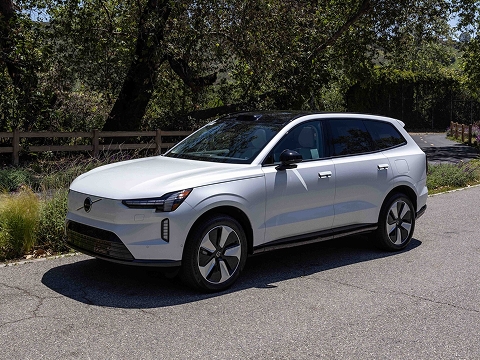
Picking a luxury electric SUV for your family isn't just about range or horsepower. It's about how the vehicle fits your daily life, your values, and how you want to live with a car for the next decade. The 2026 Volvo EX90 versus the Tesla Model X is one of the most compelling comparisons on the market right now, two genuinely different visions of premium electric mobility going head to head. Both are capable, spacious, and packed with technology, but put them side by side and the differences get meaningful fast. Feel free to browse our current EX90 inventory at Volvo Cars Mission Viejo as you work through this.
One fact shapes this entire conversation before we get into a single spec: Tesla has discontinued Model X production. Custom orders ended on April 1, 2026, production wound down through Q2 2026, and as of late April, US inventory has effectively sold out, with only a handful of demo units remaining at most locations. A few hundred units are estimated to remain in global inventory. For a family making a five- to ten-year ownership commitment, that's not a footnote. It's a foundational consideration. We'll come back to what it means in practice, but keep it in mind throughout.
At a Glance: Side-by-Side Specs
| Feature | 2026 Volvo EX90 Twin Motor Performance | 2026 Volvo EX90 Twin Motor | Tesla Model X All-Wheel Drive | Tesla Model X Plaid |
|---|---|---|---|---|
| Powertrain | Dual-motor electric | Dual-motor electric | Dual-motor electric | Tri-motor electric |
| Drivetrain | AWD | AWD | AWD | AWD |
| Horsepower | 670 hp | 402 hp | 670 hp | 1,020 hp |
| EPA Range | Up to 310 miles (21" wheels) | Up to 310 miles (21" wheels) | Up to 352 miles | Up to 335 miles |
| Seating Capacity | 6 or 7 | 6 or 7 | 5, 6, or 7 | 5 or 6 |
| Key Safety Tech | Dual NVIDIA DRIVE AGX Orin (500 TOPS), Emergency Stop Assist, impairment detection, expanded automatic emergency steering | Same | Autopilot, FSD capability, Sentry Mode | Autopilot, FSD capability, Sentry Mode |
| Charging Standard | CCS native, NACS adapter included (800V architecture) | CCS native, NACS adapter included (800V architecture) | NACS (Tesla Supercharger) | NACS (Tesla Supercharger) |
| Max Cargo Volume | 85.3 cu ft (rows folded) | 85.3 cu ft (rows folded) | Approx. 88 cu ft (rows folded, 6-seat config) | Approx. 88 cu ft (rows folded) |
Two Premium Electric SUVs, One Important Difference Worth Knowing First
The Volvo EX90 is built around safety-first engineering, sustainable luxury, and a calm, confident ownership experience. The Tesla Model X leans into performance, futuristic design, and deep ecosystem integration. Neither philosophy is wrong, but for families making this decision, that core distinction shapes nearly everything, from how the interior feels to how each vehicle holds up over years of real-world use.
The Model X discontinuation makes that distinction more concrete. When a vehicle line ends, the downstream effects accumulate slowly: parts availability narrows, software support timelines get harder to predict, and resale value faces pressure. Families in South Orange County who rely on a single vehicle for school pickups, beach runs, and weekend road trips need long-term confidence, not just an impressive spec sheet at purchase.
Seating Flexibility and Family Configuration
Both vehicles seat up to seven passengers, putting them squarely on the radar for larger families. The EX90 offers 6- or 7-passenger configurations with 40.9 inches of front legroom and 36.5 inches in the second row. Those are dimensions that translate to genuinely usable third-row access, not seats that exist just to hit a number on a brochure.
The Model X Long Range also reaches seven seats, but the Plaid tops out at five or six. The optional captain's chairs in the second row improve comfort in that row while cutting flexibility for families who need every seat filled on a regular Tuesday. Worth thinking about real-world use here, not just maximum capacity on paper.
Cargo Space and Everyday Practicality
Family vehicles live and die by how practical they are on ordinary days. The EX90 delivers 85.3 cubic feet of cargo space with rows folded, a well-organized space that benefits from a flat floor and smart rear-loading design. For South Orange County families hauling beach gear, sports equipment, or carpool luggage on the 5 Freeway, that kind of usable volume matters more than a raw number.
The Model X delivers competitive cargo numbers in its own right: roughly 88 cubic feet behind the first row in the six-seat configuration, with about 14.8 cubic feet behind the third row and 35.2 cubic feet behind the second. It also includes a 6.5-cubic-foot front trunk for additional storage.
Both vehicles include hands-free liftgates, which is one of those features you don't fully appreciate until your hands are full of soccer bags. The EX90 still edges ahead on usable layout, with a flatter floor and a more boxy load area, but the raw volume figures are closer than they look.
Driving Range and Charging Capabilities
Range anxiety is still real for many families making the switch to electric, especially those who regularly cover the stretch between Mission Viejo and Los Angeles or plan longer road trips.
Volvo EX90: Range and Fast Charging
The 2026 EX90's AWD models offer an EPA-estimated range of up to 310 miles on 21-inch wheels and up to 300 miles on 20- or 22-inch wheels. The Twin Motor produces 402 horsepower and hits 0-60 mph in a manufacturer-reported 5.7 seconds.
The Twin Motor Performance, now rated at 670 horsepower for the 2026 model year and the most powerful Volvo ever built, gets there in 4.7 seconds. The 800-volt charging architecture supports DC fast charging from 10-80% in as little as 22 minutes at a 350 kW station, and adds roughly 155 miles of range in 10 minutes at a compatible 800-volt charger.
For families who plan charging stops around meals or rest breaks, that's a genuine advantage. The EX90 uses the CCS charging standard natively and ships with a NACS Fast Charging Adapter as standard, giving owners access to both public CCS networks and over 29,000 Tesla Supercharger stalls across North America.
Tesla Model X: Range and Supercharger Access
The Model X Long Range AWD delivers an EPA-estimated range of up to 352 miles; the Plaid reaches up to 335 miles. The Supercharger network adds roughly 200 miles in about 15 minutes and remains one of the most developed fast-charging systems available.
For families who travel long distances often, that infrastructure advantage is real. The Model X uses the NACS standard, which is primarily optimized for Tesla's own Supercharger network. The gap in third-party charging access is narrowing, but it's a practical consideration for South Orange County drivers whose regular routes take them beyond well-networked corridors.
Safety Technology and Driver Assistance
This is where the 2026 EX90 makes its most compelling argument. Volvo engineered the safety system around an advanced sensor set of cameras, radars, and ultrasonic sensors that build a real-time, high-precision 360-degree picture of everything around the vehicle. The computing backbone is dual NVIDIA DRIVE AGX Orin processors running at 500 TOPS, a level of processing power typically associated with autonomous research programs rather than production family SUVs.
Worth noting upfront: Volvo announced in November 2025 that LiDAR is no longer offered on the 2026 EX90, ending its partnership with supplier Luminar. Volvo's position is that its core computing power and existing sensor suite continue to deliver the same high level of safety and driver support without it.
Specific features include connected safety alerts for slippery roads and hazards ahead, expanded automatic emergency steering that functions in darkness, Emergency Stop Assist with integrated automatic e-call, and impairment detection that monitors driver attention and can intervene when it senses drowsiness or distraction.
The Model X ships with Autopilot standard, and Full Self-Driving (Supervised) capability is available as an $8,000 upgrade. Autopilot handles lane centering, adaptive cruise, and highway navigation with a smoothness Tesla drivers consistently praise. Sentry Mode and 360-degree monitoring add useful parked-vehicle security. From a family safety standpoint, the EX90's emphasis on monitoring the driver, not just the road ahead, alongside its substantial onboard compute, reflects a more comprehensive safety philosophy than systems built around camera vision alone.
Interior Design and the Luxury Experience
Step inside the EX90 and it immediately feels different from most electric vehicles. Volvo used responsibly sourced and recycled materials throughout, including wool-blend textiles, all wrapped in a Scandinavian minimalism that reads as genuinely premium rather than just expensive.
The interface centers on a Google-powered touchscreen with Apple CarPlay and Android Auto support. Four cabin color options, a panoramic roof, four-zone climate control, and a high-end audio system round out an interior that's remarkably serene at highway speeds.
The Model X delivers a different kind of luxury: a 17.4-inch touchscreen, minimal physical controls, automatic doors, an expansive glass roof, and those signature Falcon Wing rear doors. The steering yoke has divided opinion, with some drivers finding it awkward during low-speed maneuvering.
If you're drawn to a tech-forward aesthetic, the Model X interior is genuinely impressive. If sustainable materials and a more traditional luxury feel matter more to you, the EX90 is probably the more satisfying place to spend time long-term.
Long-Term Ownership: Why the EX90 Is Built for the Road Ahead
Buying a family vehicle means choosing a service relationship and a parts ecosystem you'll live with for years. Both vehicles carry a 4-year/50,000-mile warranty. Beyond that baseline, the EX90's long-term story is strengthened by Volvo Cars Mission Viejo's certified service team and Volvo's track record of durable, consistently built vehicles.
The Model X discontinuation adds real complexity to that long-term picture. Parts pipelines narrow, software support timelines become harder to predict, and resale values face downward pressure. The Model X has also drawn criticism in owner reviews for panel gaps and build inconsistencies, friction that high-frequency family use tends to amplify. For a deeper look at powertrain options and trim configurations, our EX90 features and trims overview covers the full lineup.
Best For: Matching the Right SUV to Your Family
Based on the verified data above, here's how we'd summarize it.
The 2026 Volvo EX90 is the stronger fit for families who prioritize proactive safety systems, long-term ownership confidence, sustainable interior materials, and broad charging network compatibility. It's the right choice for those making a multi-year commitment to a vehicle that will be well-supported throughout.
The Tesla Model X suits buyers drawn to raw performance (the Plaid's manufacturer-reported 0-60 in 2.5 seconds is extraordinary), the convenience of the Supercharger network, and the futuristic cabin experience. That said, with production ended, custom orders closed since April 1, 2026, and US inventory effectively sold out, it's a choice that requires accepting real availability constraints going in. For most buyers, the practical path forward is the used market.
Experience the 2026 Volvo EX90 at Volvo Cars Mission Viejo
No comparison article fully replaces the experience of sitting inside a car and actually driving it. At Volvo Cars Mission Viejo, we're ready to walk families through the 2026 EX90 in person, answer specific questions about how it fits South Orange County life, and take you out for a test drive that makes everything in this comparison feel concrete. View available 2026 EX90 models in our inventory, or reach out through our contact page with any questions. For families who are seriously working through this decision, spending an hour with us is often the most efficient way to arrive at a confident answer.